
Blog
Why Do Some Flowers Bloom at Night? A Microscopic Exploration

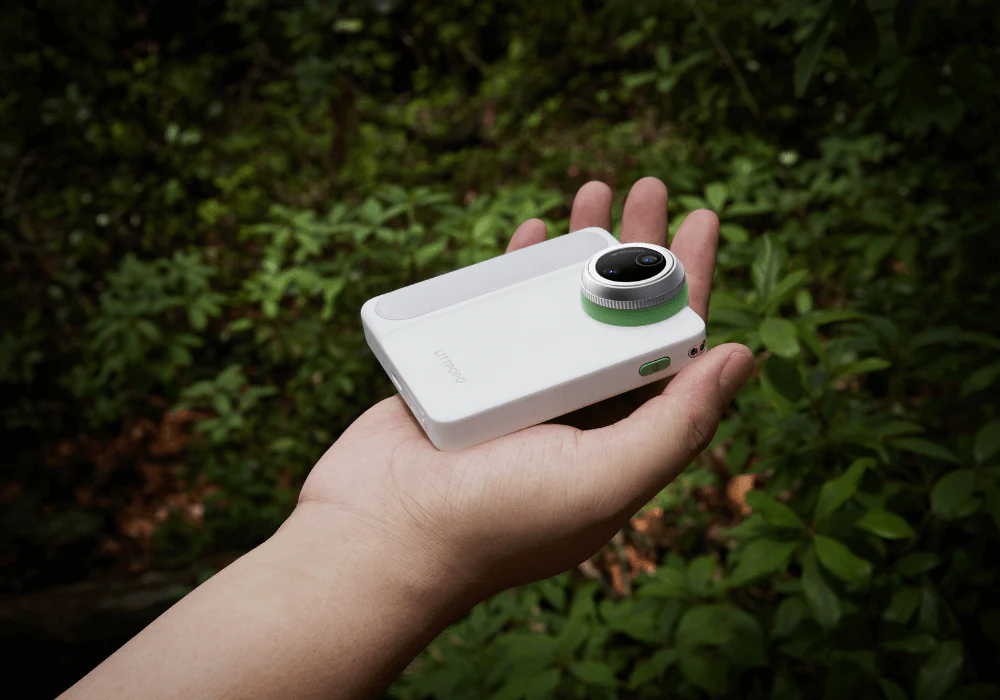
Though the majority of flowers react to the sun, there is a special group that spreads only in the dark. These species of night-bloom are governed by rhythms and biological clues, the ones that are much more fascinating under the eye of a MicroScope Camera. Their cell actions, aroma systems, and flower blooming patterns can be observed under proper magnification and close-up images in a manner that the naked eye cannot.
Why Some of the Flowers Like the Night.
It is possible to attract Nocturnal Pollinators.
Flowers that bloom at night are most likely to rely on moths, bats, and insects that come out at night. These pollinators are also very dependent on smell over color, and thus the flowers bloom emit strong fragrances and have pale colored petals that are easily visible even in low light levels. The production of nectar also normally goes up at night.
Shielding against heat and sun rays.
During hot or dry seasons, flowering during the day may be subjected to UV damage, dehydration, and pollen drying. The Flower that blooms at night also contributes to a reduction of moisture loss and covering of the fragile constructions, hence a strategic survival advantage to these species.
Temperature-Triggered Opening
Microscopic alterations of the petals are triggered by the cooling effect of the evening air. Water is absorbed by cells, causing them to expand and attach mechanical force, which opens the bloom. This cell expansion can be more clearly seen under magnification and demonstrates the level of sensitivity of flower tissue to changes in temperature.
Exploration on a microscopic level: What Night Blooms Tells You.
The details in each bloom are complicated, and they are revealed by a MicroScope Camera. Within a greater magnification, the petals are covered with micro-ridges which reflect limited moonlight. The grains of pollen are seen to assume symmetrical shapes, and cells of the epidermis have defined specialized textures to emit smell effectively during the night. These patterns will give an idea of the way each species attracts nocturnal pollinators.
Internal changes as they occur in blooming can also be seen through microscopy. Stomata tend to open so that they can bring more air in without compromising hydration. The nectar glands swell and shine and thus are easily seen with the help of macro lenses with the ability of close distances. Time-lapse videos depict flowers as they open in slow rhythmic batches as the cells fill with water, and high-resolution video recordings of reflections, micro-fluorescence, and even small motions that cannot be seen with the naked eye.
What a Microscope Camera Puts Your Eyes on.
A MicroScope Camera allows researchers and hobbyists to record:
- Close-range macro focusing on surface textures and reflectance patterns.
- High-magnification levels of cell-based activity.
- Night flower nudges captured in clear and sharp video.
- Whole florations that were sewn up with time-lapse photography.
- Through these abilities, we get to see the concealed mechanism of the flowers that develop to work under the influence of darkness.
The Equipment behind the Exploration: A Closer Look.
To analyze and capture night-blooming flowers at an ideal level, the camera to be used should be able to capture not only micro but also macro details with accuracy. A MicroScope Camera used in botanical exploration usually possesses features such as a 5 cm macro focusing distance that is well-suited to record the texture of the petals, structure of pollen, or nectar droplets without distortion.
It must be highly versatile as well. With a camera of nearly 400X magnification, the close-up of individual cells, stomata behavior, and finer patterns on the surface that determine the interaction of these flowers with their nocturnal pollinators can be studied. Combined with highlighting, even small buildings are clear and sharp.
The other significant one is documentation. A device that is able to record 4K video will enable a user to observe the movement, curve, and unfolding of petals in real time. This degree of distinctness will not miss a point–even the glittering effect of microscopic fibres of vegetation can be seen without difficulty. Time-lapse photography would also be invaluable to longer observations, allowing one to fully observe the process of the blooming of the closed bud to a full open flower.
Night-Blooming Flowers That are Worth a Look.
Examples of those that are best studied with a microscope or macroscopically include:
- Moonflower – known to have a dramatic unfolding during dusk.
- Night-Blooming Cereus – uncommon, sweet-smelling, and flowers only once a night.
- Evening Primrose – the flower opens quickly, and it is ideal for time-lapse recording.
- Queen of the Night is fragranced heavily and has spectacular structural features.
- It is in each of these flowers that the microscopic aspects of the behavior of the plants at night reveal the intricacy of the plant behavior.
Conclusion
One of the most amazing specialties of nature is the night-blooming flower. The smell, form, and time have developed complexly to survive at night. With the addition of a MicroScope Camera with a macro feature, high magnification, detailed recording of video and time-lapse features, the hidden mechanics of their behavior during the night can be accessed and understood not only at the scientific level but also at the greater level of appreciation of the calm and detailed beauty that may manifest itself only under the moonlight.